Table of Contents
- Why Remote Teams Need Managed IT Services
- Proactive Monitoring and Reduced Downtime
- Remote IT Support for Businesses: Always On Call
- Remote Workforce Cybersecurity and Data Protection
- IT Support for Hybrid Working Environments
- Business Continuity for Remote Teams
- Cost Efficiency and Scalability
- Frequently Asked Questions
Last Updated: October 4, 2026
Why Remote Teams Need Managed IT Services
Remote work has fundamentally changed how businesses operate. Teams now span multiple locations, time zones, and networks. This shift brings efficiency gains but also new security and support challenges. The benefits of managed IT services for remote teams address these pressures directly, ensuring your systems stay secure, available, and aligned with your business goals.
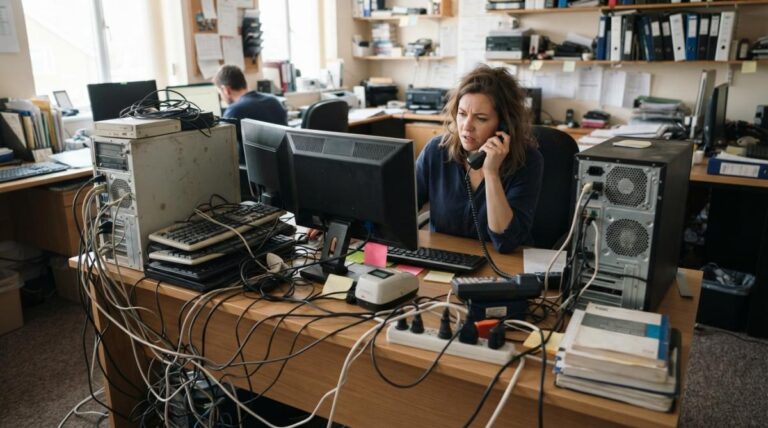
Managed IT services flip this dynamic. Instead of reacting to problems, you get proactive monitoring, expert support, and peace of mind.
This guide covers seven key benefits that matter most to remote operations. Whether you’re running a small team from Diss or managing distributed staff across Norfolk and Suffolk, these advantages translate directly to reduced costs, fewer disruptions, and stronger security.
Proactive Monitoring and Reduced Downtime
Downtime costs money. Every hour your systems are offline, your team can’t work. Customers can’t reach you. Revenue stops flowing. Proactive monitoring catches problems before they become outages.
Managed IT services continuously scan your network, servers, and applications. They identify issues at the earliest stage, when they’re easiest and cheapest to fix. A small disk space warning becomes a simple cleanup task instead of an emergency server replacement. A failing hard drive gets replaced before data loss occurs.
For remote teams, this matters even more. When your office is distributed, you don’t have IT staff physically present to troubleshoot. A managed service team becomes your always-on technical backbone. They see problems developing in real time and address them before your team even notices something’s wrong.
The result is fewer unexpected outages, shorter resolution times, and more predictable system performance. Your team stays productive because they’re not dealing with crashes and slowdowns.
Set up alerts for critical systems and ensure your managed IT provider responds within agreed timeframes. Most remote teams benefit from 24/7 monitoring.
Remote IT Support for Businesses: Always On Call
Remote work means your team might be online at any hour. Someone in Diss might work early mornings while another team member logs in late at night. Traditional IT support with fixed office hours doesn’t work for this reality.

Remote IT support for businesses means help is available when you need it, not just during standard hours. A managed service team covers your timezone needs. If someone encounters a technical problem at 10 PM on a Friday, they don’t have to wait until Monday morning. They get support immediately.
This continuous availability keeps your team unblocked. A developer can troubleshoot a connectivity issue without losing momentum. A sales rep can resolve a laptop problem without missing a client call. Support happens in the background, maintaining productivity across all hours.
For teams spread across different regions, round-the-clock support becomes essential. Managed IT services provide this coverage without you needing to hire a full IT department. The cost is predictable. Beyond the software infrastructure, maintaining productivity across these distributed environments often requires a standardized set of essential tech accessories to ensure every team member remains fully equipped.
24/7 support availability directly translates to fewer lost hours and higher team productivity, especially for remote operations that don’t follow traditional office schedules.
Remote Workforce Cybersecurity and Data Protection
Remote work introduces security risks that office-based teams don’t face. Employees connect from home networks, coffee shops, and public wifi. Devices travel between locations. Files get shared across unsecured channels. These scenarios create vulnerabilities that hackers actively exploit.
Remote workforce cybersecurity requires a different approach than traditional office security. Managed IT services implement protections designed specifically for distributed teams. This includes endpoint protection on every device, secure VPN connections, multi-factor authentication, and encryption for sensitive data.
Regular security updates become automatic instead of optional. Employees get trained on phishing and social engineering threats. Access controls ensure people can only reach the systems and data they actually need. Backups happen continuously so data loss doesn’t mean permanent loss.
The stakes are high. A single compromised device can expose your entire company’s data. A ransomware infection can shut down operations completely. Managed IT services reduce these risks substantially by implementing industry-standard security practices across your entire infrastructure.
IT Support for Hybrid Working Environments
Many teams now use hybrid models: some days in the office, some days remote. This creates complexity because your infrastructure needs to support both scenarios seamlessly. An employee might use a desktop in the office, a laptop at home, and a mobile device anywhere. IT support for hybrid working environments keeps everything synchronized and secure across these different contexts.
Managed IT services handle this complexity. They ensure your office infrastructure and remote access tools work together smoothly. Files sync across devices automatically. Security policies apply consistently whether someone’s in the office or working from home. Software updates happen without disrupting either location.
For businesses in Norfolk and Suffolk managing hybrid teams, this consistency matters. You don’t want employees choosing between security and convenience. You want systems that are both secure and easy to use, regardless of location. Managed IT services make this possible.
Business Continuity for Remote Teams
What happens to your business if a major system fails? If your email goes down, can your team still communicate with clients? If your file server crashes, can people access the documents they need? Business continuity planning ensures your operation survives disruptions.
Remote teams are particularly vulnerable to continuity challenges because they lack physical proximity. If something fails, there’s no IT person walking around to manually fix it. Business continuity for remote teams requires automated failover systems, redundant infrastructure, and clear recovery procedures.
Managed IT services build this resilience into your infrastructure. They maintain backups in multiple locations so data survives server failures (Disaster Recovery). They implement redundancy so critical systems have automatic backups. They create disaster recovery plans and test them regularly. When something does go wrong, recovery happens quickly with minimal data loss.
This preparation prevents minor issues from becoming major crises. It protects your revenue and your reputation.
Without proper business continuity planning, a single server failure can cost days of productivity and potentially damage client relationships. Regular backups and failover systems are non-negotiable for any business relying on remote operations.
Cost Efficiency and Scalability
Building an in-house IT department is expensive. You need to hire skilled technicians, pay for their equipment, provide benefits, and manage training and turnover. For small and medium-sized businesses, this cost is often prohibitive.
Managed IT services offer a different model. You pay a predictable monthly fee for support and monitoring. As your business grows, you scale your service level up without hiring additional staff. As your team shrinks, you scale down without managing redundancies. This flexibility is invaluable for businesses that are growing or adjusting their operations.
The cost comparison is usually stark. You get access to a broader range of expertise because the managed service team specializes in different technologies and platforms. You get better tools and resources because the service provider invests in them across many clients.
For businesses in Diss and the surrounding areas, managed IT services often deliver better value than hiring local IT staff. You get professional-grade support at a fraction of the cost of building that capability internally.
The benefits of managed IT services for remote teams extend beyond technology. They fundamentally change how your business operates. Your team stays productive because systems work reliably. Your data stays secure because threats are addressed proactively. Your costs stay predictable because you’re not dealing with emergency repairs and unplanned downtime.
At Ibertech Solutions, we understand the specific challenges remote teams face. Our team in Diss provides 24/7 managed IT support tailored to how your business actually works. We handle monitoring, security, support, and business continuity so you can focus on growing your business. Whether you need comprehensive managed services or targeted support for specific systems, we’re here to keep your remote operation running smoothly. Contact us today to discuss how managed IT services can transform your remote team’s productivity and security.
Frequently Asked Questions
What are the main benefits of managed IT services for remote teams?
Managed IT services provide 24/7 monitoring, proactive issue detection, enhanced security for remote devices, and reduced system downtime. They ensure your team stays productive regardless of location, handle software updates automatically, and provide immediate support when problems arise. This keeps your business running smoothly whilst your staff works from anywhere.
How do managed IT services improve remote workforce cybersecurity?
Managed service providers implement multi-layered security including endpoint protection, regular security updates, and monitoring for suspicious activity across all remote devices. They enforce password policies, manage access controls, and conduct regular security audits. This protects sensitive company data from threats that specifically target remote workers, who often face higher security risks than office-based staff.
Are managed IT services suitable for small businesses with remote staff?
Yes. Small businesses benefit significantly from managed IT services because they gain enterprise-level security and support without the cost of hiring a dedicated IT team. Managed services scale with your business, so you pay for what you need. Whether you have 5 remote employees or 50, a managed service provider adjusts support to match your requirements and budget.
What is the difference between managed IT services and break-fix support?
Break-fix support reacts to problems after they occur, meaning your team experiences downtime before help arrives. Managed IT services work proactively, monitoring systems continuously to identify and fix issues before they impact your business. This preventative approach reduces unexpected outages, improves productivity, and provides peace of mind that your infrastructure is constantly watched.